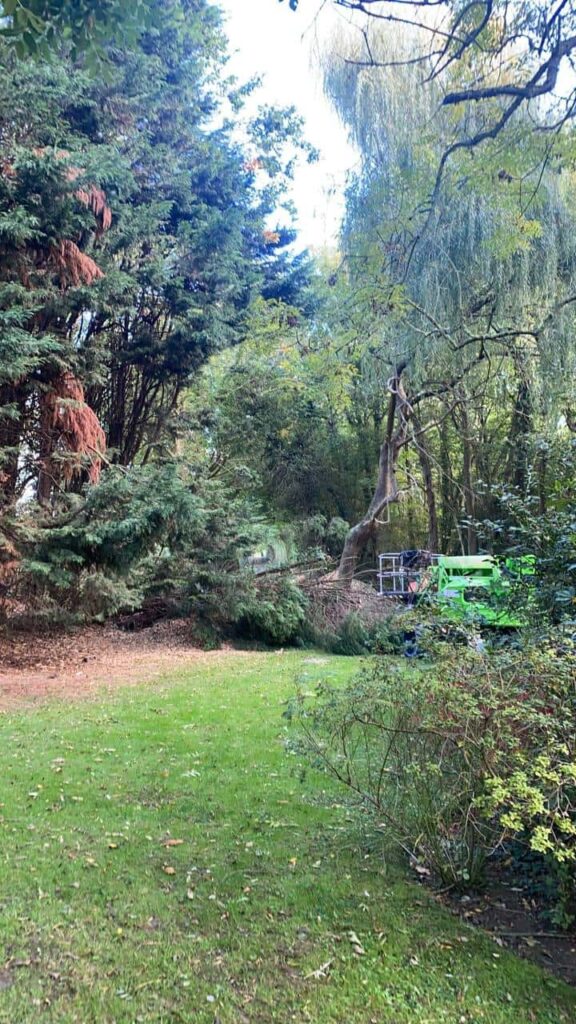
Trees naturally move in the wind, develop irregular shapes and change as they mature, so an unusual-looking tree is not automatically unstable. However, sudden leaning, significant branch damage, movement around the base or other noticeable changes can indicate that a tree needs professional assessment.
For property owners in Eye, Suffolk, recognising these changes early can be particularly valuable. An unstable tree is not something that should simply be judged by appearance from ground level. Its roots, trunk, branch structure and recent changes all need to be considered together.
At Eye Tree Surgeons, professional assessment can help determine what is causing the concern and whether appropriate tree surgery can manage the affected tree safely and sensibly.
What Does an Unstable Tree Actually Mean?
Tree instability can take several forms.
The entire tree may be moving because its root system or supporting ground has been affected. Alternatively, the main tree may remain stable while an individual branch, stem or union has developed a weakness.
This distinction matters because the appropriate tree surgery depends on which part of the tree is causing concern.
Potential signs include:
- A tree developing a new or increasing lean
- Movement around the base
- Cracks or splits within major branches
- Large hanging or broken limbs
- Exposed or disturbed roots
- Changes following strong winds
- Significant deadwood
- Sudden changes in the crown
- Large branches becoming partially detached
Not every one of these signs means that the complete tree is unstable, but they are sensible reasons to arrange a professional assessment.
A New Lean Deserves Attention
Some mature trees have naturally grown at an angle for many years and remain established in that position.
A tree that has recently started leaning is different.
If the angle appears to have changed, particularly following strong winds or prolonged wet conditions, there may have been movement within the root system or surrounding ground.
Other clues can sometimes appear around the base, including disturbed soil or changes in the position of exposed roots.
A newly developing lean should therefore be assessed rather than assuming the tree has always looked that way.
Movement Around the Base Can Be Significant
The roots provide the tree with essential anchorage.
If noticeable movement is occurring where the trunk enters the ground, particularly during windy conditions, professional advice should be sought.
Root-related problems are difficult to evaluate accurately from appearance alone because much of the root system is concealed beneath the ground.
A tree surgeon can consider visible root condition, ground movement, the tree’s overall position and other relevant signs before determining what action may be appropriate.
Cracks in the Trunk or Major Branches Should Be Investigated
Large trees can develop cracks and splits for several reasons.
Some features may be longstanding, while others can develop following branch movement or difficult weather. The important point is whether the crack represents a significant change or weakness within the tree’s structure.
Particular attention should be given to cracks around major branch unions where substantial limbs divide from the main stem.
Because these branches can carry considerable weight, visible structural changes deserve professional assessment.
Hanging Branches Need Prompt Attention
A partially broken branch can remain caught within the crown rather than falling immediately.
From ground level, it may be difficult to determine how securely the branch remains attached. Smaller branches can also become suspended among surrounding growth.
Professional tree surgery can be used to remove appropriate damaged or hanging material in a controlled manner.
Attempting to pull or cut suspended branches from below can be unpredictable, particularly where the branch is large or positioned high within the canopy.
Storms Can Reveal Existing Weaknesses
Strong winds place substantial forces through a tree’s crown, trunk and roots.
Sometimes this causes obvious damage. In other situations, the weather exposes weaknesses that were already developing.
After particularly difficult conditions, changes worth noticing can include:
- Newly broken branches
- A change in the tree’s angle
- Fresh cracks
- Hanging limbs
- Disturbed ground around the trunk
- Large sections of the crown appearing different
If a mature tree looks noticeably different after strong winds, arranging an assessment can help establish whether intervention is necessary.
Deadwood Can Become More Significant on Large Trees
Dead branches can occur naturally within mature tree crowns.
The importance of deadwood depends partly on its size and location. A substantial dead branch above a frequently used part of the garden deserves more attention than a small twig within an inaccessible section.
Deadwood can become increasingly brittle as it deteriorates.
Professional tree surgery can identify and remove appropriate dead branches while retaining healthy growth wherever possible.
An Unstable Branch Does Not Necessarily Mean an Unstable Tree
This is an important distinction.
A mature tree can remain fundamentally stable while one branch has become damaged, split or poorly supported.
In these circumstances, targeted tree surgery may be able to address the affected part without unnecessary work elsewhere in the crown.
Possible approaches depend on the individual tree but may include selective branch removal or appropriate crown management.
Professional assessment helps ensure that the extent of the work reflects the actual problem.
Heavy, Overextended Branches May Need Managing
As trees mature, some branches can extend considerable distances from the main trunk.
The further a heavy limb grows, the more leverage can be placed around its attachment point. This does not mean every long branch requires cutting, but branches showing defects or causing particular concern may deserve closer examination.
Where appropriate, carefully planned pruning can sometimes reduce problematic growth while maintaining a balanced crown.
The aim should be purposeful tree management rather than indiscriminately reducing healthy branches.
Sudden Changes Are Particularly Worth Noticing
Property owners often become familiar with the appearance of established trees.
This makes sudden changes useful indicators that something deserves attention.
You might notice:
- The crown sitting differently
- A branch hanging lower than before
- A new split
- Previously level ground becoming disturbed
- A section losing foliage unexpectedly
- A noticeable increase in movement
- Recently exposed roots
These changes provide useful information when discussing the tree with a professional.
Trees Close to Property Features Need Careful Assessment
The position of a tree influences how important particular defects may be.
A damaged branch extending over an open part of a garden presents a different situation from one positioned above a driveway, fence, roof, path or frequently used outdoor area.
Professional tree surgery considers both the condition of the tree and its surroundings.
This helps determine which areas require attention and allows the work to focus on the actual concern rather than removing healthy growth unnecessarily.
Can Crown Reduction Help an Unstable Tree?
Crown reduction can be appropriate for certain trees and circumstances, but it should not be treated as a universal solution for instability.
The procedure involves reducing the height and/or spread of the crown through carefully selected pruning cuts while retaining a balanced form.
Where excessive crown dimensions or particular branches are contributing to a management concern, reduction may sometimes form part of the recommended work.
However, if the problem originates from significant root or structural deterioration, simply making the crown smaller does not automatically resolve the underlying issue.
The cause needs to be identified first.
When Is Tree Removal Considered?
Tree surgery is not always about removing trees.
Where appropriate, pruning and other management work can retain mature trees while addressing specific problems. However, there are circumstances where the condition and stability of a tree may mean that removal needs to be considered.
This decision should be based on professional assessment of the individual tree rather than appearance alone.
Where retention remains appropriate, unnecessary removal should not be the default approach.
Why DIY Assessment Can Be Misleading
A tree’s visible appearance tells only part of the story.
A substantial branch may look secure from below despite having a significant split higher within the crown. Conversely, an unusual trunk shape may have existed for decades without representing a recent change.
Large tree work also introduces challenges involving branch weight, height and unpredictable movement.
Professional assessment provides a clearer understanding of what has changed and whether tree surgery is actually required.
What Information Can You Give a Tree Surgeon?
When contacting a tree surgeon, observations about recent changes can be extremely useful.
Consider whether:
- The tree has recently started leaning.
- The ground has moved around the base.
- The tree has changed following strong winds.
- Any large branches have broken.
- Cracks have recently appeared.
- Branches are hanging within the crown.
- Parts of the canopy have changed noticeably.
- The tree is positioned close to frequently used areas.
This information can help provide useful context when the tree is assessed.
Why Early Assessment Can Provide More Management Options
Problems affecting trees can become more difficult to manage if substantial deterioration develops before they are investigated.
For example, a damaged branch identified at an earlier stage may require targeted attention while the remainder of the tree stays unaffected. If that branch later breaks and damages surrounding growth, the situation can become more complicated.
Similarly, recognising unusual movement early provides an opportunity to establish what is happening before further changes occur.
Early assessment does not automatically mean tree surgery will be necessary. It simply provides the information needed to make a more informed decision.
Professional Tree Surgery in Eye, Suffolk
At Eye Tree Surgeons, we provide professional tree surgery services throughout Eye, Suffolk. When concerns arise about an unstable tree, our approach begins with understanding which part of the tree is affected and what may be causing the change.
The roots, trunk, branches, crown and surrounding area can all provide important information.
Where targeted tree surgery is appropriate, work can focus on the relevant branches or sections while retaining healthy growth wherever practical. Where the concern is more significant, a wider assessment helps determine the appropriate next step.
Conclusion
You should consider contacting a tree surgeon when a tree develops a new lean, visible movement around its base, significant cracks, hanging branches, substantial deadwood or noticeable changes following strong winds. Sudden changes are particularly important because they may indicate that something within the tree or its supporting structure has altered.
Not every unusual-looking tree is unstable, and not every damaged branch means the entire tree requires major work. Professional assessment is valuable because it identifies the actual cause of concern and helps determine whether selective pruning, crown management, branch removal or another approach is appropriate.
If you have concerns about a large or potentially unstable tree at your property in Eye, Suffolk, contact Eye Tree Surgeons. We can assess its condition and recommend appropriate tree surgery where necessary, helping you manage established trees carefully and maintain a well-kept outdoor space.
Call us on: 01379 773 584
Click here to find out more about Eye Tree Surgeons
Click here to complete our contact form and see how we can help with your tree needs.