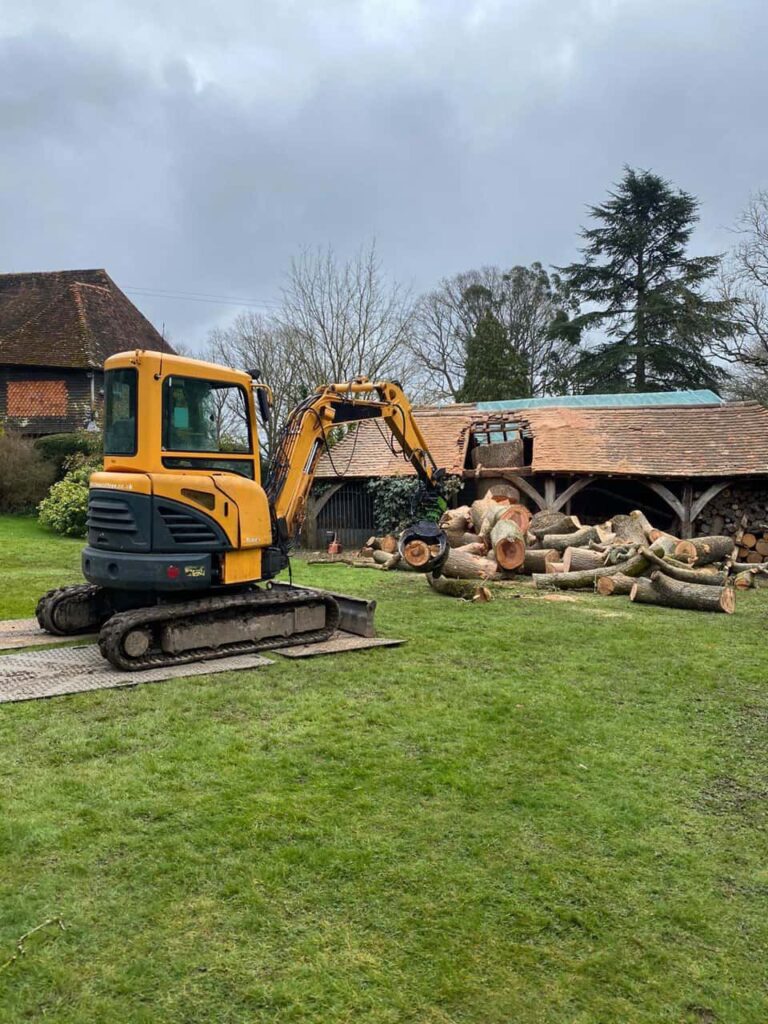
When a tree is removed, many homeowners are surprised to discover that the stump and remaining roots can continue to grow long after the trunk has gone. This regrowth is more than just an inconvenience—it can create new saplings, encourage root spread and even cause disruption around the garden or property. Stump grinding is one of the most effective methods for preventing this regrowth and ensuring the tree does not revive in the future.
For homeowners in Eye and the wider Suffolk area, understanding the importance of stump grinding can help protect outdoor spaces and maintain a clean, usable landscape.
Leftover Stumps Can Continue to Grow
Even after a tree has been felled, the root system often remains active. The stump continues to send nutrients to the roots, allowing new shoots to emerge around the original base. These shoots can appear repeatedly, creating ongoing maintenance challenges and allowing the tree to re-establish itself.
Stump grinding breaks this cycle by removing the central energy source—the stump itself.
How Stump Grinding Stops Regrowth
Stump grinding uses a specialised machine to break the stump down into woodchips. It grinds the remaining trunk far below ground level, disrupting the root system’s ability to regenerate.
This process:
- Removes the stump’s structural base
- Interrupts nutrient transport
- Severely weakens remaining roots
- Makes it impossible for new shoots to emerge
Without the stump, the root system loses the support it needs to continue functioning.
Preventing Root Revival and Further Spread
Some species, particularly fast-growing or vigorous varieties, have root systems that attempt to survive even after the tree is cut down. These roots may continue to spread underground, sometimes causing issues with lawns, flowerbeds, pathways or even foundations.
By grinding the stump below ground level, you significantly reduce the roots’ ability to store energy or send up new growth. Over time, the remaining roots naturally decay, eliminating the chance of revival.
A Cleaner, Safer and More Usable Garden Space
Leaving a stump behind doesn’t only risk regrowth—it can also create practical problems. A stump can become a tripping hazard, attract unwanted pests and make mowing or landscaping more difficult. Grinding removes the stump entirely from sight, leaving a level surface that can be replanted, turfed or redesigned as needed.
For gardens in Eye where space may be limited, this provides a safer and more visually appealing finish.
Helps Prevent Fungal Growth and Decay Issues
Old stumps naturally begin to rot over time. As this happens, they can harbour fungi that may spread to nearby plants or trees. Stump grinding removes the decaying material before this becomes an issue, helping maintain a healthier garden environment.
Ideal for Long-Term Landscape Planning
If you plan to replant, extend a patio, install fencing or make any changes to the layout of your garden, stump grinding ensures the old tree won’t interfere with future projects. By removing the stump completely, you retain full control of your outdoor space.
Conclusion
Stump grinding is one of the most reliable ways to prevent regrowth and root revival after tree removal. By removing the stump below ground level, it cuts off the root system from essential nutrients and creates a clean, safe and manageable area for future use.
If you have an unwanted stump or would like professional guidance after tree removal, Eye Tree Surgeons in Eye, Suffolk can help. Contact us today to arrange a stump assessment and choose the most effective solution for your garden.
Call us on: 01379 773 584
Click here to find out more about Eye Tree Surgeons
Click here to complete our contact form and see how we can help with your tree needs.